

Between the Notes: Miles Davis, Muse Records, and Muriel Grossmann
From the Plugged Nickel to Independent Jazz, Context Always Matters

The Time Between the Notes
Today’s the last day of first-round Grammy voting. My inbox has been a steady stream of “For Your Consideration” nudges, and I wasn’t planning to add to the chorus—self-promo solos get boring and go on too long. But after reading a smart note from my friend (and fellow liner-notes lifer) Nate Chinen, I was reminded how much the Best Album Notes category still matters. It’s a quiet corner of the Grammys that isn’t televised, but it’s where context lives—where the research, interviews, and the deep listening combined with late-night dot-connecting turn an album or box set into a deeper story.
If you’re a voter, thanks for keeping that space alive. If you’re a reader and listener, thanks for still opening the gatefold before you drop the needle. And if a set of liner notes or a sleeve essay has opened your ears or changed your perspective on an album, I’d love to hear about it in the comments.
For Your Consideration: Best Album Notes
Several projects I wrote this year are on the ballot. If any of these found their way to your turntable (or headphones) and resonated, I’d be grateful for your consideration.
Art Pepper – Modern Art (Blue Note Tone Poet, 2025)
Bill Evans – Explorations (Riverside/Craft Recordings Small Batch, 2024)
Charles “Charlie” Rouse – Two Is One (Strata-East, 2025)
Dizzy Reece – Blues in Trinity (Blue Note Tone Poet, 2025)
Donald Byrd – Kofi (Blue Note Tone Poet, 2024)
Kenny Burrell / Art Blakey – On View at the Five Spot: The Complete Masters (Blue Note Tone Poet, 2025)
Serge Chaloff – Blue Serge (Blue Note Tone Poet, 2025)
The Jazz Crusaders – Freedom Sound (Blue Note Tone Poet, 2025)
Various Artists – Blue Note Alts ’N Outs (UMe/Blue Note 2025)
Wayne Shorter – Odyssey of Iska (Blue Note Tone Poet, 2024)
Yes – Close to the Edge: Super Deluxe Edition (Rhino/Warner Music, 2025)
Happy the Man – Happy the Man & Crafty Hands (Arista/Iconoclassic, 2025)
Nominated or not, I’m proud of the work and the records. Thanks for listening and for reading. And to those who may be on that Grammy liner notes committee: thank you for your consideration!
While We’re on the Subject of Liner Notes
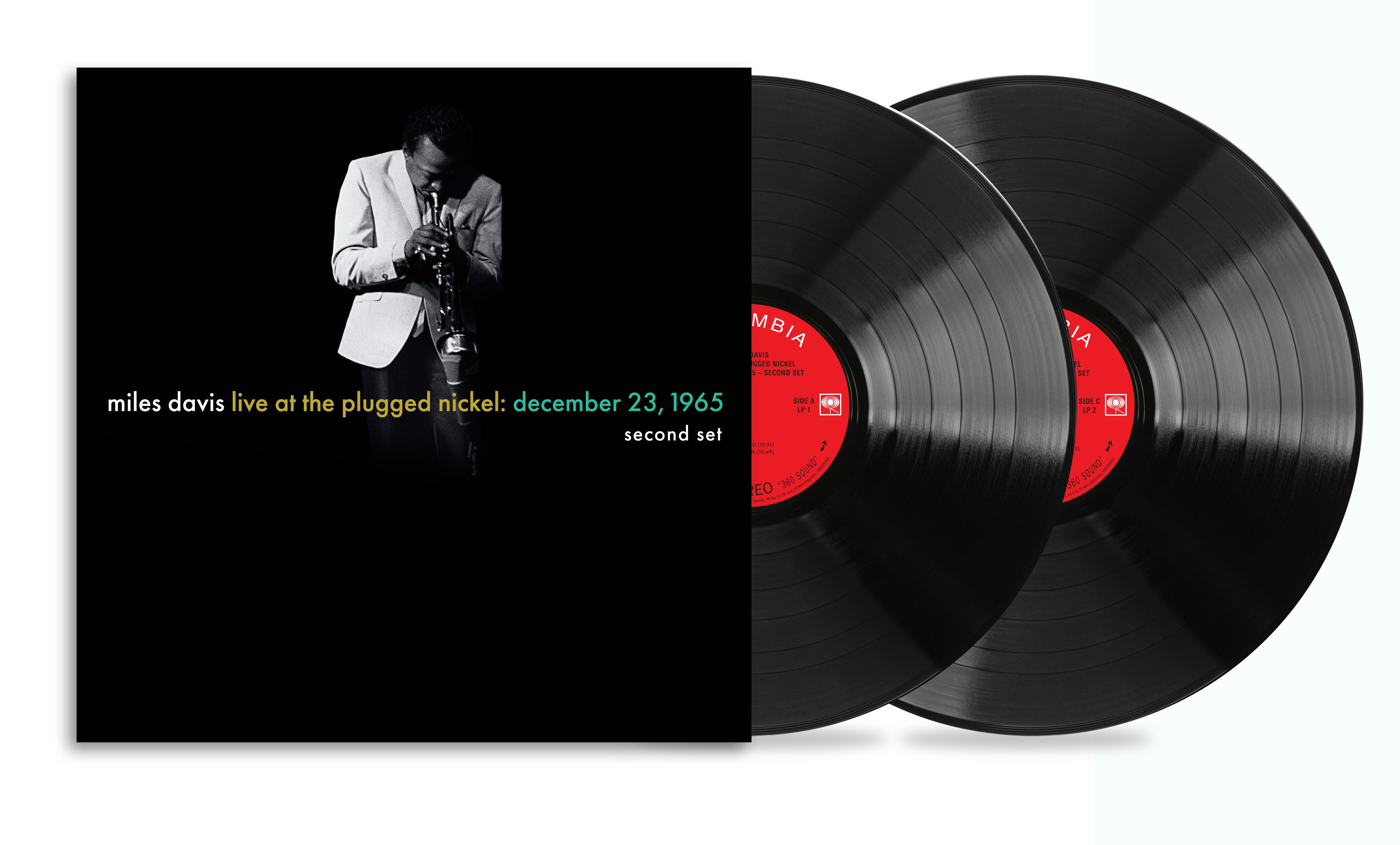
It’s an honor beyond description to have written new, comprehensive liner notes for a fresh deep dive into the Miles Davis Quintet’s legendary Plugged Nickel 1965 recordings, both a Record Store Day double LP:
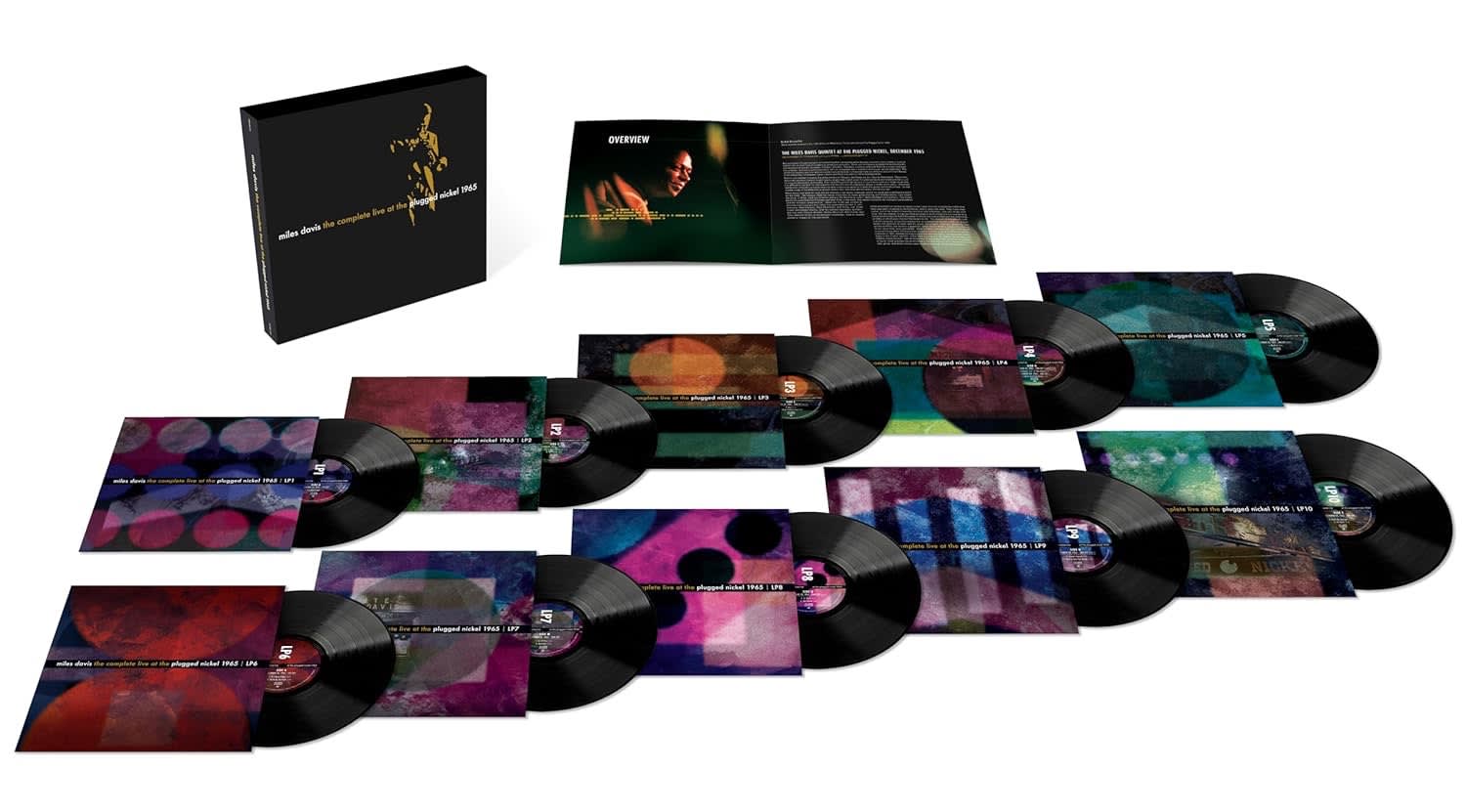
And the reissue of the complete recordings in a 10LP or 8CD box:
Full Contact Improvisation. Nobody Wears a Helmet.
What began as a holiday residency at Chicago’s Plugged Nickel Café became the crucible where the Second Great Quintet forged its identity. “Anti-music,” the secret pact the band made to challenge expectations, audiences, and themselves, turned familiar songs inside out. Standards became co-conspirators in a nightly assault on the band’s own repertoire.
Over two nights and seven sets, Miles, Wayne Shorter, Herbie Hancock, Ron Carter, and Tony Williams pulled off something extraordinary. Like the Rosetta Stone, which paired Greek with Egyptian hieroglyphics, these recordings fused a familiar repertoire with a newly invented language: fractured harmony, inverted roles, near-telepathic interplay, and rhythmic sleight-of-hand. Five bodies, one mind.
What makes these sets indispensable is how raw they are. You hear risk in real time and tension hanging in the air as the quintet takes collective leaps of faith into the unknown. Misfires skid toward collapse, only to land in triumph. This is as real as it gets: no AI stem separation, no ProTools surgery, no safety net. Until we invent time travel, this is the closest you’ll ever get to being in the room.
The Plugged Nickel sets capture the sound of revolution mid-flight as the future unfolds before an unsuspecting audience.
The Record Store Day double LP contains all of Set II from the second night (12/23). The complete 10LP/8CD box arrives in January to kick off the Miles Davis Centennial.
This one is personal. I first pushed for a Plugged Nickel reissue back in 2014 when I joined Sony Legacy, and it remained unfinished business when I left in 2021. To see it finally happen—and to have had a hand in telling the story—is surreal.
But Wait, There’s More! Breaking Through With Muriel Grossmann
It was a thrill to write the liner notes for the Muriel Grossmann Quartet’s new release—the aptly titled Breakthrough—available October 25th via RR Gems and Muriel’s Bandcamp page.
Grossmann’s quartet includes steady, longtime collaborators Radomir Milojkovic (guitar), Abel Boquera (Hammond B3, Fender Rhodes, Moog), and Uros Stamenkovic (drums). Their deep cohesion allows a shared musical vision to emerge naturally, organically, and effortlessly expressing the inexpressible. Their trust in the music and in each other is what grants them this power and clarity, with Breakthrough a new yet somehow very familiar waypoint along the journey that began with The Light of the Mind. A well-deserved five-star review just hit over at UK Vibe. You can stream the track “Already Here” in the embedded YouTube video below, and the full text of my liner notes “The Art of Letting Go” is available here.
The Muse Reawakens: Time Traveler Recordings Rescues a Forgotten Jazz Treasure
Some record labels live forever in the popular imagination—Blue Note’s schwinging elegance, Prestige’s bebop grit, ECM’s Nordic minimalism. Others do the work, document the moment, and then fade into the margins of jazz history, waiting for someone to tell their stories.
Muse Records was one of those labels. And now, thanks to producer and Jazz Detective Zev Feldman’s new Time Traveler Recordings imprint, Muse is getting a second act it always deserved.
The Label That Time (Almost) Forgot
Founded in 1972 by legendary producer Joe Fields—a Prestige Records veteran who understood that the spirit of independent jazz didn’t die with the '60s—Muse was designed as a continuation of the bebop-era indie ethos. It became a haven for both established artists and hungry newcomers navigating the jazz landscape of the 1970s, a decade when fusion was going electric, spiritual jazz was reaching for the cosmos, and hard bop was refusing to retreat into the jazz history books. The label documented where jazz was actually going, not where critics or the marketplace wished it would go. And for that honest documentation, it’s been criminally overlooked in the reissue era.
Until now.
The Rolls-Royce Treatment
Time Traveler’s Muse Master Edition Series launches October 17 with three knockout reissues: drummer Roy Brooks’ incendiary 1972 live album The Free Slave; pianist Kenny Barron’s 1973 debut as a leader, Sunset to Dawn; and Panamanian tenor saxophonist Carlos Garnett’s cosmic 1976 big band suite Cosmos Nucleus, featuring a 20-year-old Kenny Kirkland in his first recording studio appearance.
If you’ve experienced Zev’s previous reissue work, you already know he doesn’t do these things on the cheap. Feldman and his team are giving these albums what he calls “The Rolls-Royce, ultra-deluxe vinyl experience”:
180-gram LPs pressed at Germany’s Optimal Media
Analog mastering directly from original tapes by Matthew Lutthans at The Mastering Lab
High-gloss tip-on jackets from Stoughton Press
New liner essays by Shannon J. Effinger (Brooks), Ted Panken (Barron), and yours truly (Garnett)
Packaging that mirrors the original productions with thoughtful upgrades
Future releases are planned quarterly, with heavyweights like Woody Shaw, João Donato, Clifford Jordan, and Joe Chambers on deck.
Why Muse Matters Now
When Barney Fields—Joe’s son—heard about the reissues, he said something that I was really pleased to read:
“I’m so happy to see the Muse catalog being reissued, and that it’s being given the proper curation. The world will get to be exposed to this music all over again. I think my father would be honored to see that something like this is happening—and I know, with the Time Traveler folks at the helm, that it’ll be done right.”
That word—curation—is key. In an era when reissues can feel like algorithmic cash-grabs or bare-bones data dumps, what Feldman is doing with Time Traveler feels like restoration in the truest sense. These records are being treated as historical documents and living art. The new liner notes provide context. The mastering reveals sonic details that have been buried for decades. The packaging honors the original vision while addressing its limitations.
The First Three: A Snapshot
The Free Slave captures Roy Brooks—a Detroit innovator who worked with everyone from Horace Silver to Chet Baker—leading a fearsome quintet featuring Woody Shaw, George Coleman, Hugh Lawson, and Cecil McBee at a 1970 Baltimore gig. It’s hard bop with teeth, captured live when the music still mattered more than the mythology.
Sunset to Dawn was Kenny Barron’s debut as a leader, recorded in 1973 when he was just 30 but already a veteran of Dizzy Gillespie’s band. The album splits its personality between timeless acoustic jazz and the funky electric zeitgeist, showcasing Barron’s unshakable grooves and luminous touch alongside vibraphonist Warren Smith and a rhythm section that locked tighter than a bank vault.
And Carlos Garnett’s Cosmos Nucleus? As I wrote in the liner notes for this reissue:
There are albums that arrive fully understood, embraced, and canonized on Day One. ‘Cosmos Nucleus’ is not one of those albums. When it landed in 1976, Carlos Garnett’s ambitious jazz-funk big band suite felt like an alien transmission—too esoteric for R&B radio, too rhythmic for the jazz snobs, and entirely too cosmic for a post-bop world still trying to reckon with its own future. Listening to it now is a bit like stepping into that famous Star Trek episode where a transporter glitch beams you into a parallel universe everything looks familiar on the surface, but the rules have changed and Spock has a beard.
That’s Cosmos Nucleus: it speaks the language of jazz—improvisation, horns, swing, spiritual depth but the grammar, phrasing, and priorities have all been reprogrammed. The solos stretch differently and the grooves carry ancestral weight. The compositions orbit ideas that don’t resolve in the usual ways. Nearly fifty years later, the album doesn’t feel like an outlier so much as a dispatch from that alternate dimension—one that only recently synced into our frequency.
This wasn’t fusion in the commercial sense, nor was it spiritual jazz in the Coltrane lineage alone. This was music untethered from form, genre, and gravity. Occasionally, it also untethered your butt from the couch and out to the dance floor. If Charles Tolliver’s Strata-East big band projects offered a high-powered blueprint for ensemble transcendence, Garnett’s charts drew from stranger maps: less symmetrical, more astral, pulsing with spiritual urgency and polyrhythmic electricity. And yes, occasional danceability—not enough for a radio hit, but just enough to make jazz purists scoff. Which is why it’s long past time to give ‘Cosmos Nucleus’ another day in court.
Beyond Jazz
Here’s what excites me most: Feldman isn’t limiting Time Traveler to jazz. “We’re starting with jazz, but we’re not limited to it,” he says. “The idea is to have a whole array of thoughtfully curated archival material for heritage artists from across musical genres.”
That’s the vision—treating music history with the respect and resources it deserves, regardless of genre. In a world where streaming has flattened our relationship with recorded music into background noise and algorithmic suggestions, there’s something genuinely radical about lavishing this much care on albums most people forgot existed.
Bottom Line
“Muse Records is really one of the great untapped record labels when it comes to reissues,” Feldman says. “Its catalog captured where the music was going in the 1970s. These Time Traveler reissues will have the best sound, production quality, and packaging possible, complete with new inserts, liner notes, and photographs. I’m incredibly excited about these releases. Muse is one of my favorite labels of all time, and it’s time to dress up these albums in a big tuxedo.”
The tuxedo fits. I’m not one for formalwear, but I’m thrilled to welcome Muse back. We’ve been waiting a LONG time! Pre-order here.
In Closing, RIP D’Angelo
Music news and social media were alight yesterday in tribute to D’Angelo, who flew from this world yesterday at age 51 after a private struggle with pancreatic cancer. His life and work are profiled in the New York Times, though I suggest settling in with this performance from the 2000 Montreux Jazz Festival first:
Until next time…
I don't think you mentioned that Sunset to Dawn and The Free Slave were produced by Don Schlitten, who co-founded Muse with Joe Fields after a brief partnership at Cobblestone. They split in 1974, when Schlitten launched his Xanadu label. During the 60sz Schlitten produced a bunch of great albums as director of A&R for Prestige, where Joe Fields also was working.
I love CD liner notes- usually if I get a new thing I read the notes before I play the discs!