

Mystery Tapes and Jazz Congress
Jazz Business Meetings and Declaring Nerd War on Lost Yes Recordings

January in New York: Jazz Congress 2026
I hope 2026 is treating everyone well. My first big event of the new year was the annual Jazz Congress, a conference whose stated mission is to bring together artists, media, and industry leaders in the global jazz community. This was my second year attending, and like last year, I found it fascinating and rewarding. It was great to see many familiar faces, put faces to names I’ve only seen online, and make new friends. I also bumped into several online pals whom I’ve never met, and it was particularly great to see fellow Substacker Vinnie Sperrazza (whose Substack is superb).
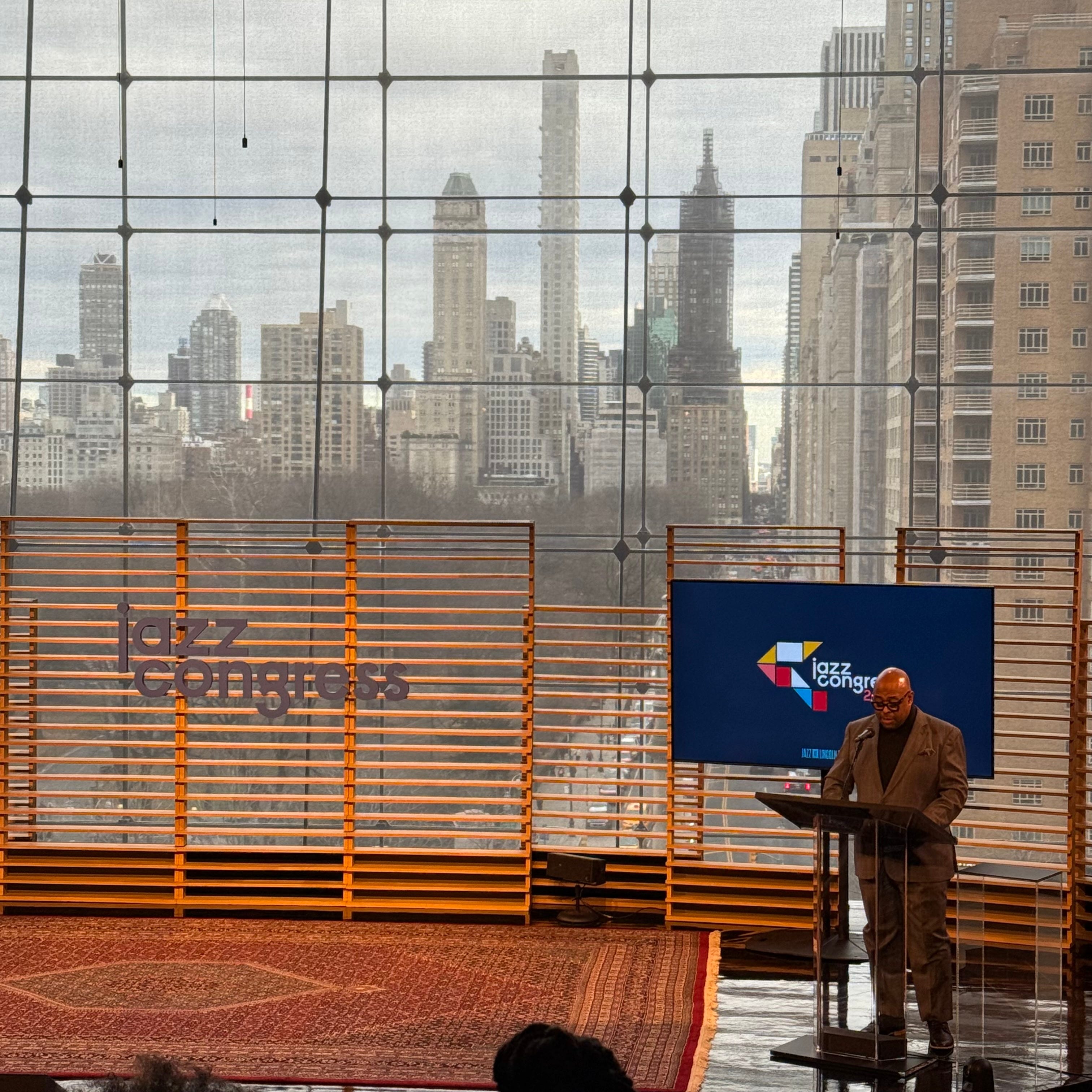
The Jazz at Lincoln Center setting is a beautiful place to get inspired by speakers like bassist Christian McBride:
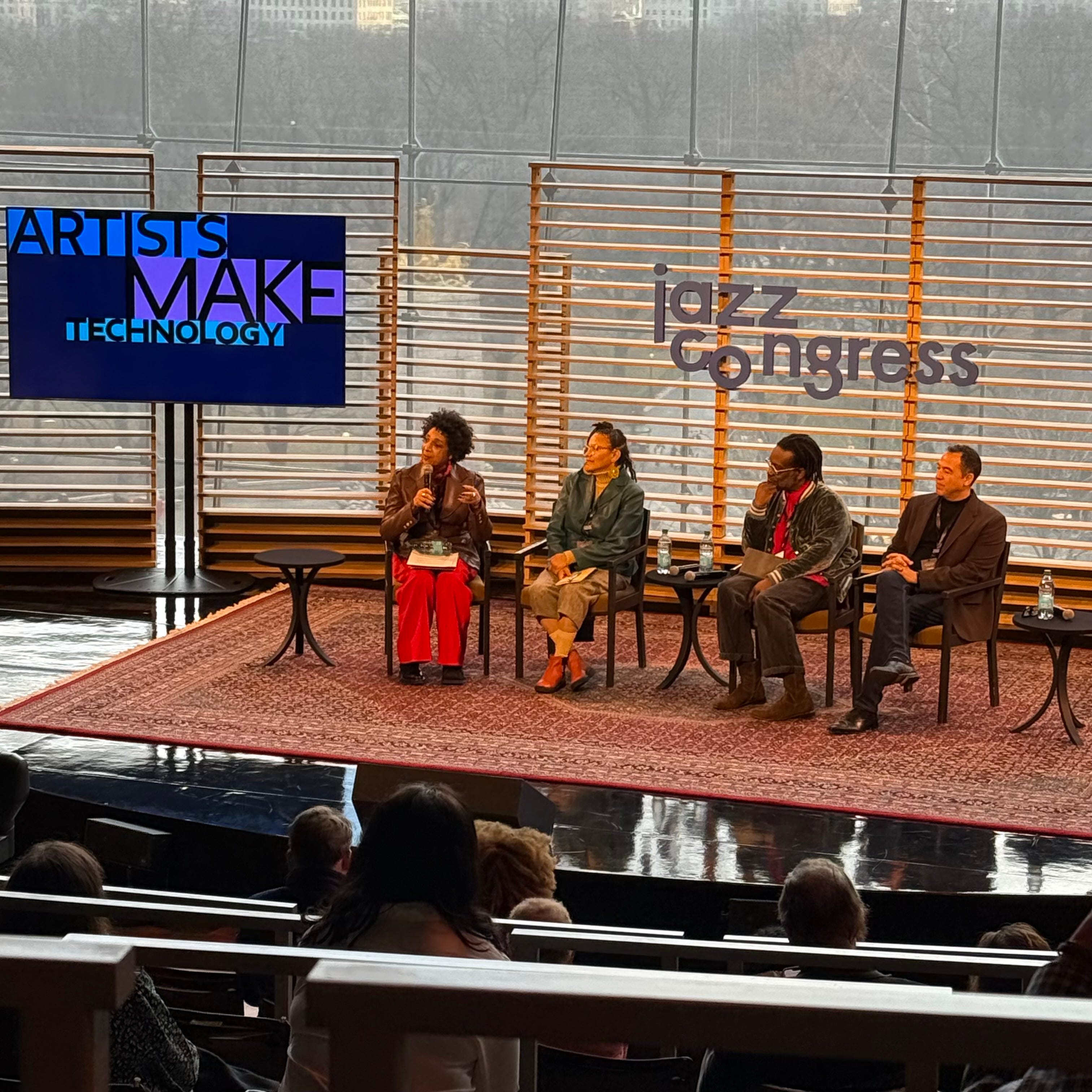
Or hear engaging panels about artists and technology:
Or balance your phone, notebook, and a coffee while joining (or avoiding) the second line making its way through the lobby.
Other speakers included bassist Ron Carter, Milestones podcast curator Angelika Beener, and Liz Pelly (Author of Mood Machine: The Rise of Spotify and the Costs of the Perfect Playlist). The panel discussions ranged from the opportunities and challenges of jazz archival work to addressing the changing media landscape as traditional news adjusts to digital disruption and the rise of influencers. All in all, an excellent conference, and I look forward to attending next year.
On the final evening, I had the opportunity to see the Patricia Brennan Septet at the Jazz Gallery:
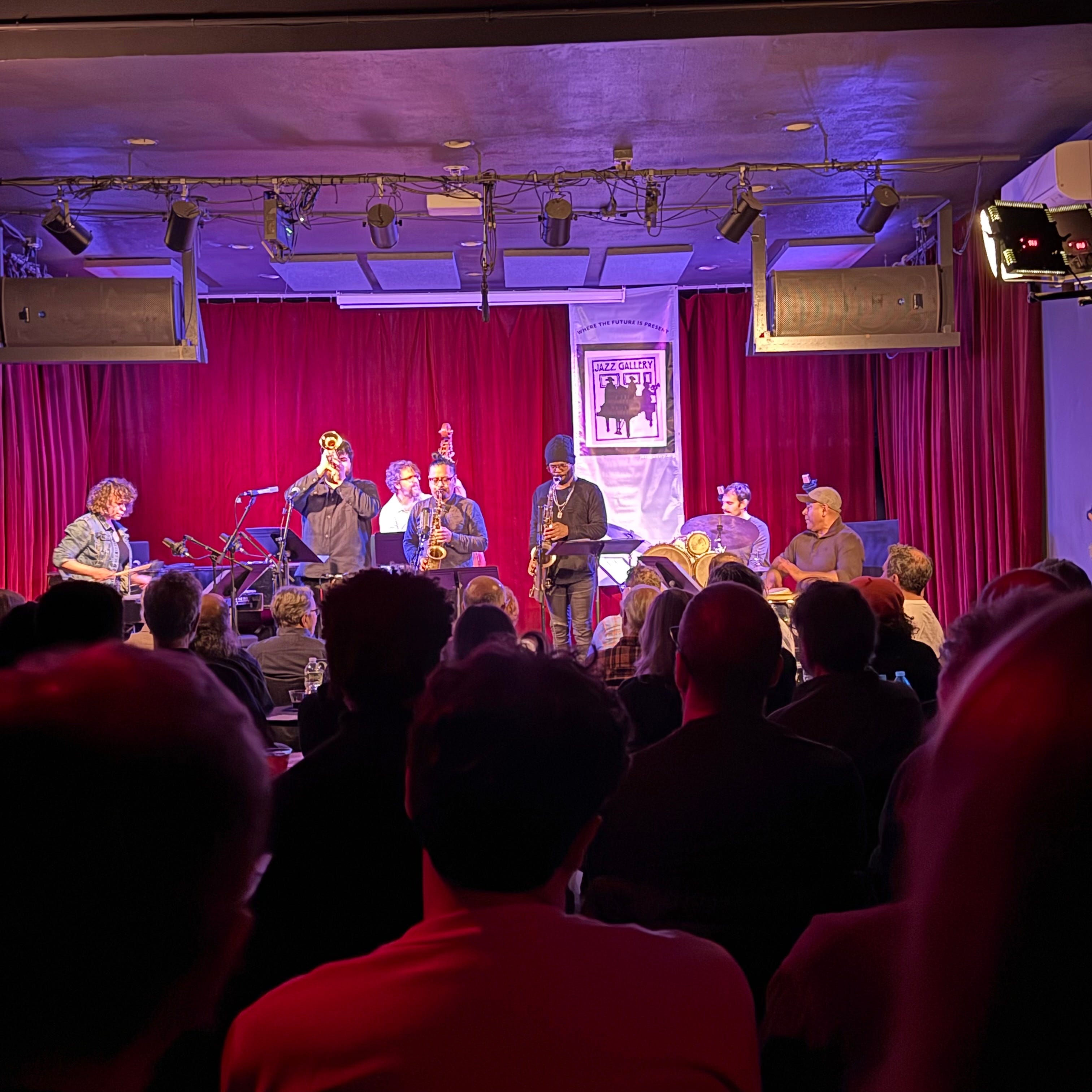
They played a fantastic set to an enthusiastic audience as part of the Pyroclastic Records showcase that kicked off NYC Winter Jazzfest, and I floated out of the venue when it was all over. Incredible band—don’t miss them if they’re playing nearby.
A personal and professional highlight was getting a few minutes to speak with Richard Seidel, whom I met briefly last year. Richard has been writing liner notes since before I could ride a bike, and his career as a radio host, producer, and label executive has been one I've admired from afar since my early days in the biz. He was incredibly generous with his time. When he mentioned he'd been reading my work, I had one of those "pinch me" moments that became a personal and professional highlight of the conference.
I’m holding on to that moment as I look at the calendar and a fresh set of deadlines. Deadlines are stressful, but writing is fun. The fun parts of writing came up a lot in conversations at Jazz Congress, and I got questions about everything from writing for Instagram vs. Substack vs. liner notes, to choosing voice and tone, to balancing historical accounts with personal insights. And one of my favorites: fact-finding from eras before everybody was walking around with phones in their hands, documenting every fucking thing under the sun.
All those conversations got me thinking about something I don’t talk about much: the research process behind liner notes. Specifically, what happens when you’re handed archival material with no documentation—no dates, no venues, nothing. Just music on a tape reel and a challenge to solve.
Liner Notes Research for Obsessive Music Geeks
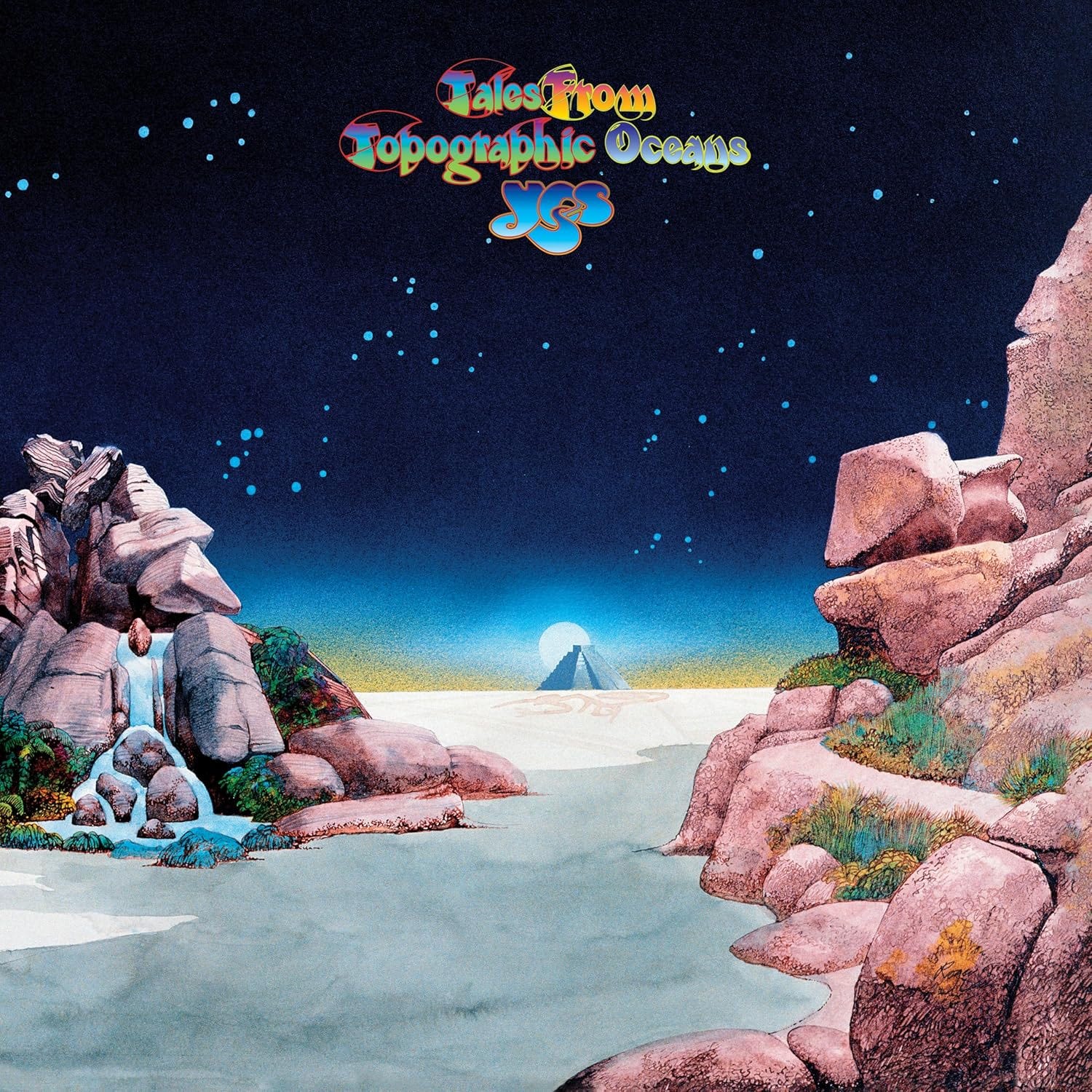
As I mentioned in my last Substack, two of the most extensive liner notes projects I’ve written to date are on the cusp of release. The first to hit the streets will be The Complete Miles Davis at the Plugged Nickel on Jan 30, which I’ll cover in the next couple of weeks. The following week sees the Super Deluxe Edition of Tales From Topographic Oceans, perhaps the most notorious, controversial album in the Yes discography.
Notorious? Controversial? Aren’t they the vegetarians who dress like druids and look like they’ve never been in a bar fight? And besides, what do they have to do with jazz? Well, jokes about capes, backstage riders with demands for lentil soup, and Yes’s inability to swing have written themselves for decades already. That said, their compositions are remarkably adaptive—here’s a “jazz” take on their classic “Heart of the Sunrise”:
I’ve had the pleasure and privilege of writing the liner notes for all of Rhino’s Super Deluxe Editions for Yes since the series launched in 2023: The Yes Album, Fragile, and Close to the Edge. The Rhino team has done a splendid job curating all of them, even with the limited amount of unreleased studio and live material available to work with, and the occasionally compromised audio fidelity of what was in the vault. Hardcore Yes fans (myself included) are an insatiable and fussy bunch when it comes to the music of their heroes. The fanbase often has a better grasp of setlists and outtakes than the band, with opinionated ideas about what they’d like (or expect) to see included in a box marketed as “Super Deluxe.” They’re the Trekkies of prog rock.
Yes weren't as diligent about documenting their live exploits during their classic 70s era as other arena-fillers, so the fanbase has filled in their own blanks with a robust network of tape trading (in the early days, Grateful Dead style) and download sites. Most of these recordings are audience-sourced, with a handful of FM broadcasts and the occasional rare soundboard considered by collectors to be nearly as essential as the core studio albums. The vault provided a few tantalizing rarities for the first three Super Deluxe Editions, but I knew that when we got to Tales From Topographic Oceans, expectations would exceed reality. Big time. Unless…

Yes guitarist Steve Howe’s archive has proven an invaluable source of rarities for several Yes releases. Among his archives were the only three professional recordings from the Tales From Topographic Oceans tour, and after some back-and-forth with Rhino, a decision was reached to include them in this Super Deluxe Edition. There were two issues causing hesitation. The primary one was that none of the shows were complete. The secondary problem was that we could only accurately identify the date and venue of one of those three recordings.
While taking the shortcut of slapping a “venue and date unknown” on the tracklist was one option, there was NO WAY I was going to let that happen without declaring nerd war. These weren’t just mystery tapes—they were potentially the only soundboard-quality recordings from the entire Tales tour. If there was any chance of identifying when and where they were performed, the fans deserved that information. I’ve been collecting live Yes tapes since the early 1980s, and I’ve got nearly every show they played in the 70s stored on my music server somewhere. There are also several excellent fan-driven online resources, like Forgotten Yesterdays, that offer a treasure trove of data, memories, and nostalgia. Finally, the only A+ I ever received in school was for my senior year of college Statistics class—a requirement for my BA in Sociology. I must remember something from back then that would help. A combination of research and running the numbers had to get us closer than “no idea.”
If anyone was primed for this moment, it was me.
I entered the 79 dates comprising Yes’s Tales From Topographic Oceans UK, US, and Europe tour into a spreadsheet. I used two primary sources to populate columns indicating whether each date had a confirmed setlist and a circulating, audience-sourced recording. Forgotten Yesterdays is the generally accepted source for verified setlist intel, while Setlist.fm combines similar attendee data with bots that use pattern matching to “fill in the blanks” based on other dates from the tour to fill in missing setlists. However, a LOT of experience with Setlist.fm has revealed frequent accuracy issues, so I’ve learned not to use it as a primary source.
I discovered that of the 79 dates, 22 have no confirmed setlist, and 46 do not circulate in the Yes “bootleg” trading communities or appear on YouTube as streams. Presuming that the setlist data on Forgotten Yesterdays is as good as we’re going to get for the time being (supported by attendee recollections and the occasional band member interview), this allowed for a more systematic analysis and a narrowing of the possible sources of the two mystery recordings under consideration for the Super Deluxe Edition of Tales From Topographic Oceans.
Here’s where the real detective work began. I took all of my own live Tales recordings containing the songs in question and began A/B-ing them against the advance music that the Rhino team had sent over. The goal was simple: could I match these mystery tapes to any of the 46 circulating audience recordings? And if not—if these were genuinely unheard performances—could I narrow down when and where they might have been recorded?
The answer to the first question came quickly: these didn’t match anything currently circulating. Which meant we were dealing with genuinely new material. The second question would take considerably more work. Using the spreadsheet as a guideline, I was attempting to figure out which shows were the origin of:
Recording #1: “The Remembering” and “The Ancient” (with one faded hint on the tape reel)
Recording #2: “The Ancient” and “Ritual” (no hints at all)
So, what would any self-respecting Yes nerd do? Why, build a probability matrix, of course!
I cross-referenced the mystery recordings against verified setlists. I looked at which songs were played together and when, noting changes that evolved as the tour progressed. I factored in the tentative quality of the performances—the slight hesitations and arrangement quirks that suggested early tour dates, before the band had locked everything in. Not to mention the crowd's uncertainty as they hesitated before clapping, unsure whether this was Yes pausing for dramatic effect or arriving at the song’s conclusion.
Once I determined that what Rhino had provided didn't match any of the currently circulating Tales gigs, and that we would stick to using only verified setlist data (along with the clue from that one tape reel), we arrived at our best educated guess. After analyzing all 79 tour dates, two shows emerged as the strongest candidates:
Manchester and Cardiff stood out with the highest probability scores—both early UK shows with verified setlists, no circulating recordings, and that faded tape box notation hinting at Manchester.
Want to see the raw data behind these conclusions? The complete 79-date tour spreadsheet is embedded below—sortable, searchable, and ready for your own detective work. Fair warning: once you start cross-referencing dates and setlists, hours can disappear. Unless you have a life, of course.

You can read more details in the liner notes, but our goal here was to prioritize transparency over certainty. I'm ready to be proven wrong. I'll even take the record label off the hook entirely—I sold them on my approach, the reasoning, and my conclusion. Once this labor of love hits store shelves, mailboxes, and streaming services, if anybody out there has intel that supports a different conclusion, please let me know.
I know Tales From Topographic Oceans isn’t everyone’s cup of tea—or coffee—but the detective work involved in solving these mystery recordings is exactly the kind of archival deep-dive that makes reissue culture so rewarding. Whether it’s tracking down details behind a lost Blue Note session or identifying an unnamed Yes gig from 1973, the process is the same: evidence, educated guesses, and a healthy respect for what we don’t (yet) know.
And speaking of new territory: I’m using this as an opportunity to introduce a new feature for Jazz and Coffee. Beginning this year, I’ll be adding video to my storytelling arsenal. The written word remains my preferred weapon of choice, but I see increasing demand for video, and I won’t let my historical camera-shyness get in the way. How this manifests will be a work in progress, and I’d love to hear your thoughts, since you’re the ones who’ll either embrace it or tell me to stick to writing. Here’s more about what’s in the Tales From Topographic Oceans Super Deluxe Edition:
What would you like to see in these videos? Reviews? Interviews with musicians, producers, and other figures in jazz, vinyl, and the music business? How-to guides on research techniques? Deep dives into specific reissues? Sound off in the comments.
Until next time, keep your heads up and the stylus down!
I was trying really hard not to get this box set because I thought it was overkill but really wanted to hear the Atmos version and some of the live gigs. but after reading and seeing your video, I must have it. It’s my favorite yes work and a masterpiece. thank you
I received the TFTO super deluxe last week. Your liner notes are phenomenal and help take my appreciation to even a higher level. Still working through the 10 hours (!) of music. Truly a journey. One "issue": "The Remembering" has, since the 2016 Panegyric release, been my favorite on the album. I was surprised to see that you describe it as "once derided as the weakest link in the Tales chain." It was? The closing moments of this track have provided some of my most cathartic experiences with any band's music. But I guess two things can be true. 😂